

People do not use products because they are powerful. They use them because they are easy.
Understanding the difference between UI and UX
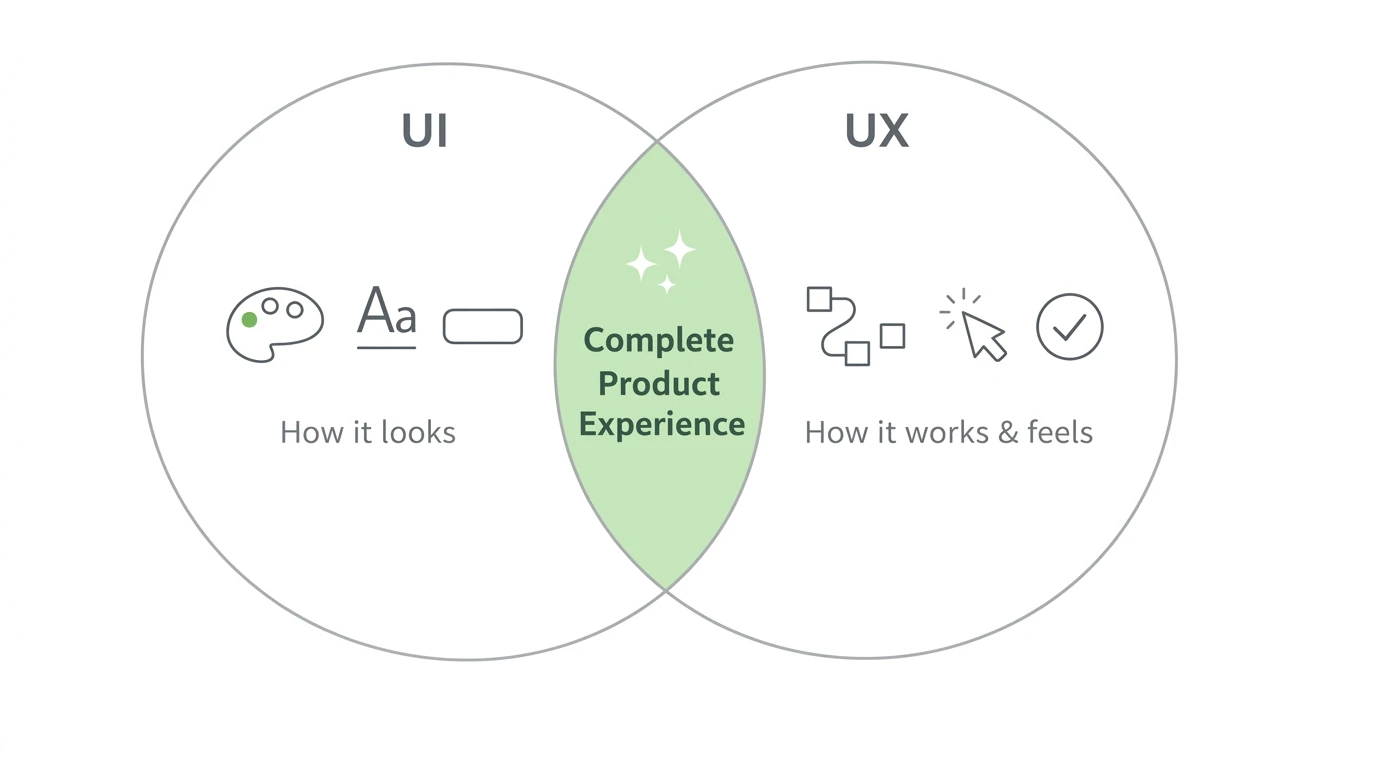
Although often used together, UI and UX serve different but complementary roles.
UI focuses on the visual layer of a product: layout and spacing, colors and contrast, typography, buttons, and visual components. It defines how the product looks.
UX focuses on the overall journey: how users navigate, how easily they complete tasks, and how intuitive the experience feels. It defines how the product works and feels.
UX reduces cognitive load and user frustration
When users face complex layouts, unclear navigation, or too many options, they experience cognitive overload. This leads to hesitation, errors, and abandonment.
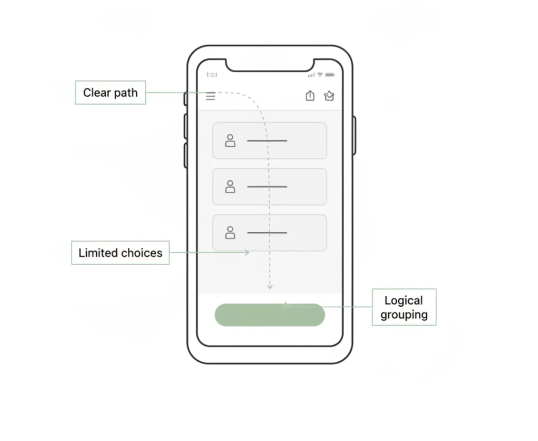
According to usability research, users prefer clear paths over unlimited choices. Reducing cognitive load significantly improves task completion and satisfaction.
A good UX design minimizes mental effort and allows users to move naturally through the experience.
“Don’t make me think.” - Steve Krug
UI/UX directly impacts conversion rates
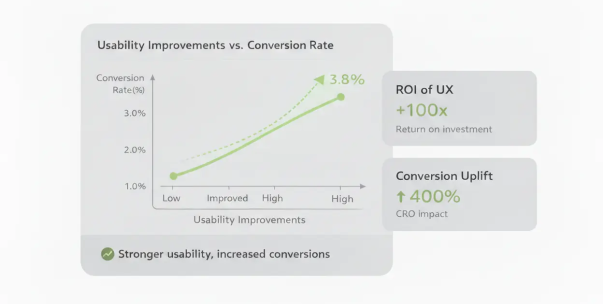
UI/UX design has a measurable financial impact. Every $1 invested in UX can generate up to $100 in return, and well-designed UX can increase conversion rates by up to 400%.
Small details make a big difference: button placement, form length, visual hierarchy, and micro-interactions.
Design does not convince users. It removes friction from decisions.
UX guides user behavior without forcing it
Great UX design does not instruct users; it guides them naturally through visual hierarchy, white space, clear calls to action, and logical content flow.
Users feel in control, not manipulated. The best UX is invisible. If users do not notice the design, it means the design is doing its job.
Poor UI/UX damages brand credibility
Even technically strong products fail when the experience is confusing.
88% of users are less likely to return after a bad user experience. 75% of users judge a company’s credibility based on its website design.
Users may forgive bugs. They rarely forgive confusion.
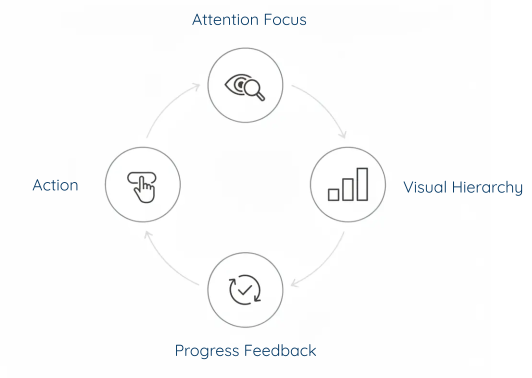
UI/UX builds emotional connection
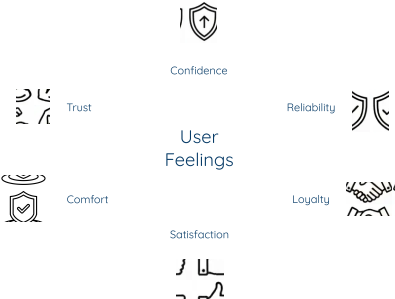
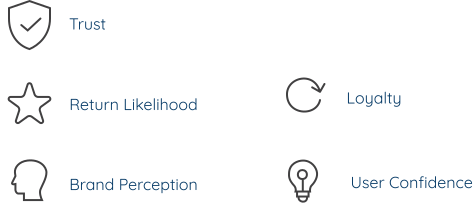
Beyond usability, UI/UX shapes emotional responses: confidence, comfort, trust, and satisfaction.
Emotionally positive experiences increase loyalty and brand advocacy. People remember how your product made them feel.
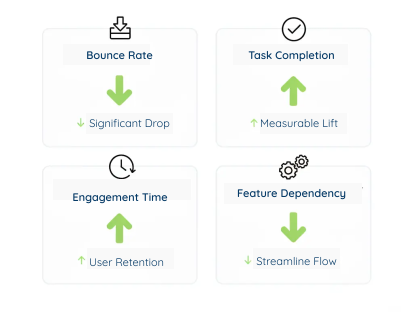
Applied case insight: UX and digital performance
Applied UX studies on service-based websites and digital platforms show that improved UX lowers bounce rates, clear navigation increases task completion, and simplified flows boost engagement time.
Improving usability often delivers faster and more sustainable results than adding new features. UX optimization is measurable, scalable, and long-term.
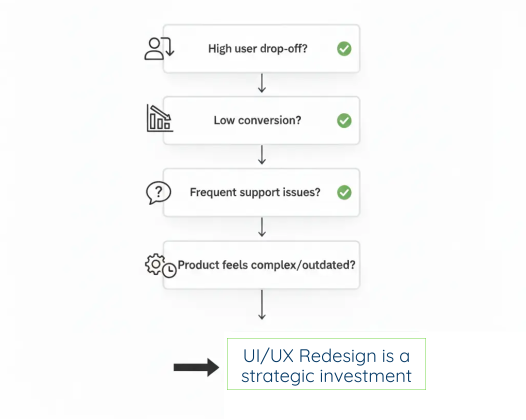
When does a business need professional UI/UX design?
Professional UI/UX becomes essential when users abandon the product early, conversion rates stagnate, support requests increase, or the product feels outdated or complex.
UI/UX is not a cosmetic update. It is a strategic correction. If users struggle, the design has already failed.
Conclusion
UI/UX design sits at the intersection of technology, psychology, and business. A successful digital product respects the user’s time, feels intuitive, communicates clearly, and evolves with user needs.
Great products are not learned. They are discovered. In a competitive digital market, users choose the one that feels easiest, fastest, and most human.
References
- Steve Krug - Don’t Make Me Think
- Don Norman - The Design of Everyday Things
- Nielsen Norman Group - Usability & Cognitive Load Research
- Forrester Research - UX ROI Studies
- Stanford Web Credibility Research
- IBM Design Thinking Case Studies
- HubSpot UX & Conversion Reports
How UI/UX Design Impacts User Experience and Digital Product Success
Start your UI/UX journey with us
Start a project