

Users do not abandon apps. Apps abandon users first.
Ignoring user experience (UX) from the start
One of the most common mistakes is focusing on features instead of users.
Bad UX includes confusing navigation, too many steps, unclear actions, and visual clutter.
Over 88% of users are less likely to return after a poor user experience. UX-focused apps show significantly higher retention rates.
If users need instructions, the design failed.
Slow performance and long loading times
Mobile users expect speed instantly. Performance issues include heavy assets, poor API optimization, and weak backend architecture.
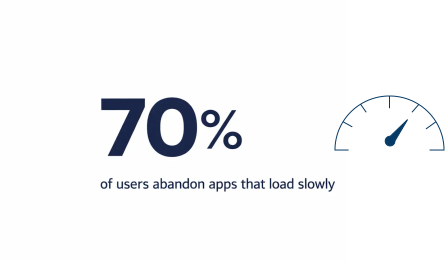
70% of users abandon apps that load slowly. App speed strongly affects ratings on app stores.
Speed is not a feature. It is the baseline.
Overloading the app with features
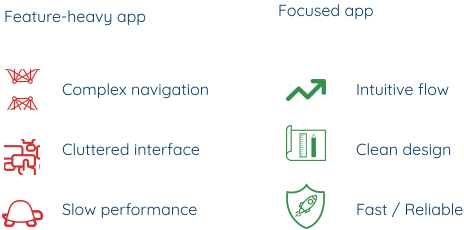
Many apps try to do everything at once. This leads to complex interfaces, higher development costs, and confused users.
Successful apps focus on core value first, then expand gradually.
Apps with a clear, focused purpose retain users better than feature-heavy apps. More features do not mean more value.
Poor onboarding experience
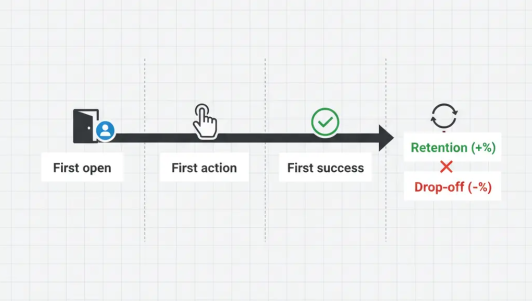
The first impression happens within seconds. Common onboarding mistakes include no guidance at all, too many tutorial screens, and mandatory sign-ups too early.
A large percentage of users abandon apps during the first session. Effective onboarding can dramatically increase activation rates.
The first 60 seconds decide everything.

Lack of personalization
Users expect apps to adapt to them, not the opposite. Ignoring personalization means generic content, irrelevant notifications, and low engagement.
Personalized app experiences significantly increase engagement. Users are more likely to stay when content feels relevant.
Relevance creates connection.
Weak push notification strategy
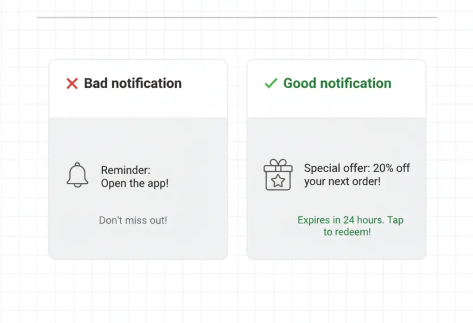
Push notifications are powerful when used correctly. Common mistakes include sending too many notifications, sending irrelevant messages, and offering no clear value.
Well-timed push notifications can increase retention by over 30%, while poor notification strategies lead to app uninstalls.
Notifications should feel helpful, not intrusive.
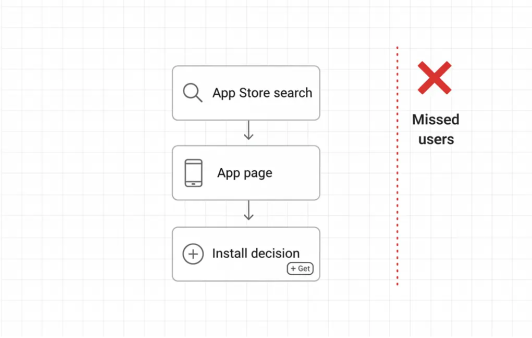
Ignoring app store optimization (ASO)
A great app can still fail if no one finds it. ASO mistakes include weak app descriptions, poor screenshots, no keyword strategy, and ignoring reviews.
App store search is one of the main discovery channels for apps. Optimized listings significantly improve download rates.
Visibility is part of the product.
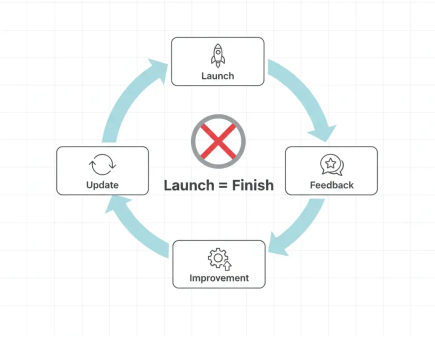
No continuous updates or improvements
Launching the app is not the end. It is the beginning.
Apps fail when bugs remain unfixed, user feedback is ignored, or no performance improvements are made.
Apps that receive regular updates maintain higher ratings and user trust. An app that does not evolve will disappear.

Ignoring analytics and user behavior
Without data, decisions become guesses. Critical mistakes include no event tracking, no funnel analysis, and no retention measurement.
Data-driven apps outperform intuition-based decisions. Analytics reveal why users leave and how to keep them.
What you do not measure, you cannot improve.
Applied case insight
Industry case studies consistently show that fixing UX and performance issues leads to immediate retention improvement, simplifying core flows reduces user drop-off, and listening to user feedback increases app loyalty.
Retention is built, not hoped for.
Conclusion
Mobile app success is not about having the most features or the biggest launch. It is about understanding users, delivering speed and simplicity, and avoiding critical mistakes early.
Great apps are invisible. They just work.
References
- Steve Krug - Don’t Make Me Think
- Nir Eyal - Hooked: How to Build Habit-Forming Products
- Firebase Analytics - App Retention & Performance
- Mixpanel - Mobile Retention Benchmarks
- Adjust / AppsFlyer - Mobile Growth & Attribution Reports
Common Mobile App Mistakes That Kill User Retention (And How to Avoid Them)
Optimize your mobile app today
Start a project